
23 September 2026
Small Hospital or Big Hospital? What Really Matters in Mental Healthcare?
Small Hospital or Big Hospital? What Really Matters in Mental Healthcare?
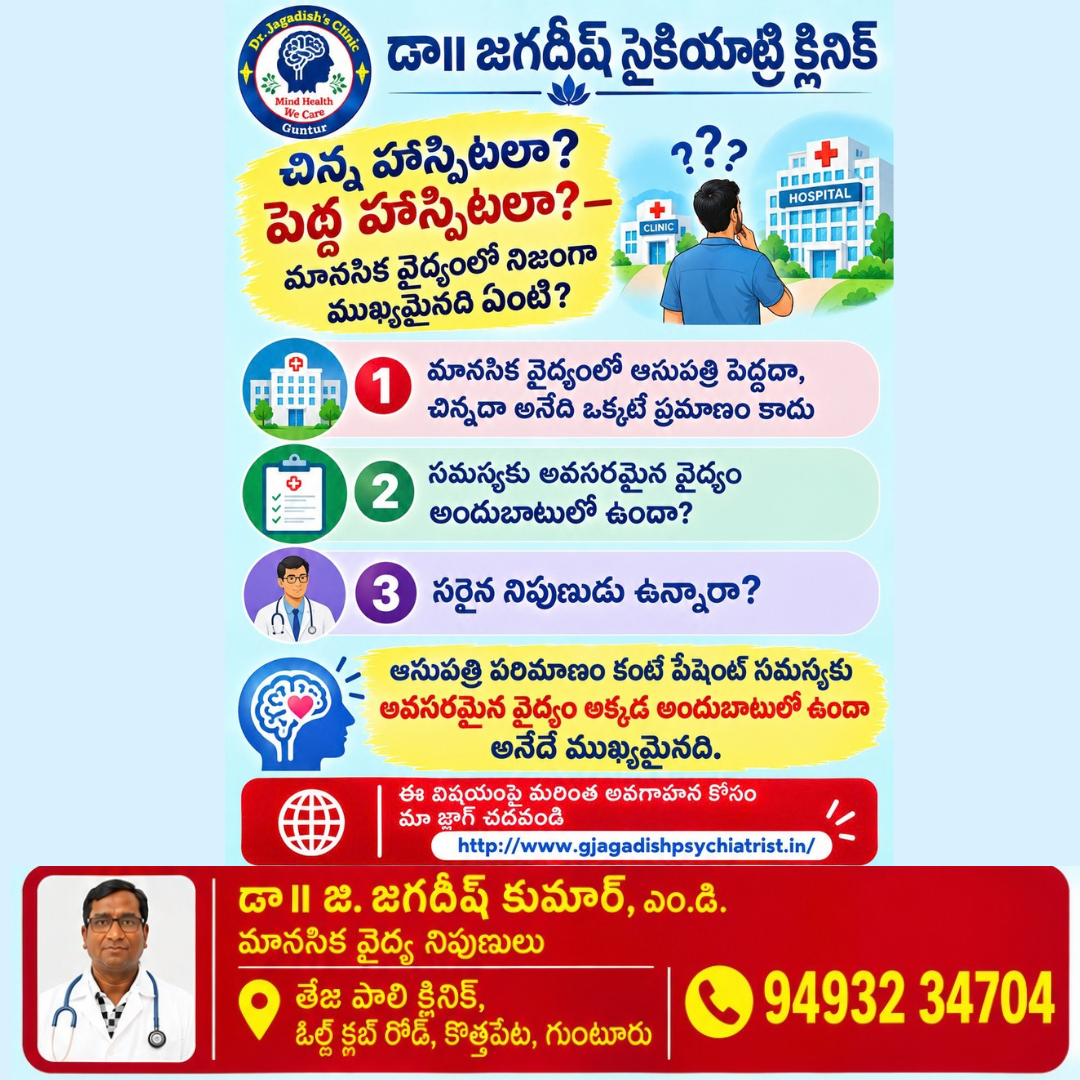
When a person is experiencing a serious mental health problem, family members often take them to a hospital for treatment. At that time, some patients may ask:
**“Why did you bring me to such a small hospital? Shouldn’t I be taken to a bigger hospital?”**
This can also make family members confused about whether a small hospital or a large hospital is the better choice.
However, in **mental healthcare, the size of the hospital is not the only factor that matters**. What matters most is whether the facility can provide the treatment and support the patient actually needs.
## What Should You Look for When Choosing Mental Healthcare?
When seeking psychiatric or mental health treatment, consider the following factors:
### 1. Is the Required Treatment Available?
The first priority is to determine whether the hospital or clinic can properly assess the patient's condition and provide the required **mental health treatment, follow-up care, and ongoing support**.
### 2. Is the Right Mental Health Specialist Available?
Patients should check whether a qualified and experienced **psychiatrist or appropriate mental health professional** is available to evaluate and manage their specific condition.
The right expertise can be more important than the physical size of the hospital.
### 3. Is a Comprehensive Mental Health Assessment Being Done?
Mental health conditions should not be assessed based on only one or two symptoms.
A comprehensive psychiatric assessment may consider:
* The patient's medical and mental health history * Current symptoms * Physical health * Medication history * Daily functioning and overall wellbeing
A detailed assessment helps the healthcare professional understand the patient's needs more appropriately.
### 4. Are Additional Medical Services Available When Needed?
Certain mental health conditions may require additional investigations or specialist support.
Depending on the patient's condition, this may include:
* Laboratory investigations * Neurological evaluation * Medical consultation * Hospitalization * Other specialist services
Therefore, it is useful to know whether the facility has a system to arrange or coordinate these services when required.
### 5. Are Emergency Mental Health Facilities Available?
Some psychiatric situations may require immediate and intensive care.
For example, a patient may need a facility with appropriate emergency or inpatient services in cases involving:
* Severe suicidal risk * Severe agitation or aggression * Severe confusion * Severe withdrawal * Other medical emergencies
In such situations, seeking care at a hospital equipped to handle emergency and inpatient needs may be necessary.
## Does a Bigger Hospital Always Mean Better Mental Healthcare?
A **large hospital does not automatically mean better mental healthcare for every patient**.
Large hospitals may have multiple departments, advanced diagnostic facilities, inpatient services, and access to different specialists.
At the same time, smaller hospitals or **outpatient psychiatric clinics** may provide appropriate psychiatric consultation and follow-up services for certain mental health conditions.
Therefore, instead of asking only:
**“How big is the hospital?”**
it is more useful to ask:
**“Does this facility provide the treatment and services my patient needs?”**
## When May a Smaller Mental Health Facility Not Be Enough?
A smaller facility may not be sufficient when a patient's condition requires services such as:
* Emergency medical care * Inpatient admission * ICU or medical support * Other specialist care * Continuous monitoring
In such situations, the patient may need to be referred to a **larger hospital or tertiary-care centre** that can provide the required level of care.
### What Does Referral Mean?
A referral does **not** mean that treatment cannot be provided.
It means directing the patient to the appropriate healthcare facility where the next level of treatment or specialist support is available.
The goal of referral is to ensure that the patient receives the care appropriate to their needs.
## What Should Families Consider When Choosing a Mental Health Facility?
When deciding where to take a family member for psychiatric treatment, don't ask only:
**“How big is this hospital?”**
Also ask:
**“Does this hospital or clinic have the treatment and services my patient needs?”**
This question can help families focus on the patient's actual healthcare requirements rather than the size or appearance of the facility.
## Key Message
In mental healthcare, **the patient's needs are more important than the size of the hospital building**.
The important factors include:
* Access to the right specialist * Proper psychiatric assessment * Appropriate treatment * Regular follow-up * Additional services when required * Referral to a higher-level centre when necessary
Instead of simply asking **“Small hospital or big hospital?”**, the more important question is:
### **“Does this facility provide the treatment and care my mental health condition requires?”**
## Consult a Mental Health Specialist
**Dr. Jagadish Psychiatric Clinic** **Dr. G. Jagadish Kumar, M.D.** Consultant Psychiatrist
📍 Teja Poly Clinic, Old Club Road, Kothapet, Guntur 📞 94932 34704