
15 September 2026
Family Emotional Support in Mental Illness: How Does It Affect Patients?
# Family Emotional Support in Mental Illness: How Does It Affect Patients?
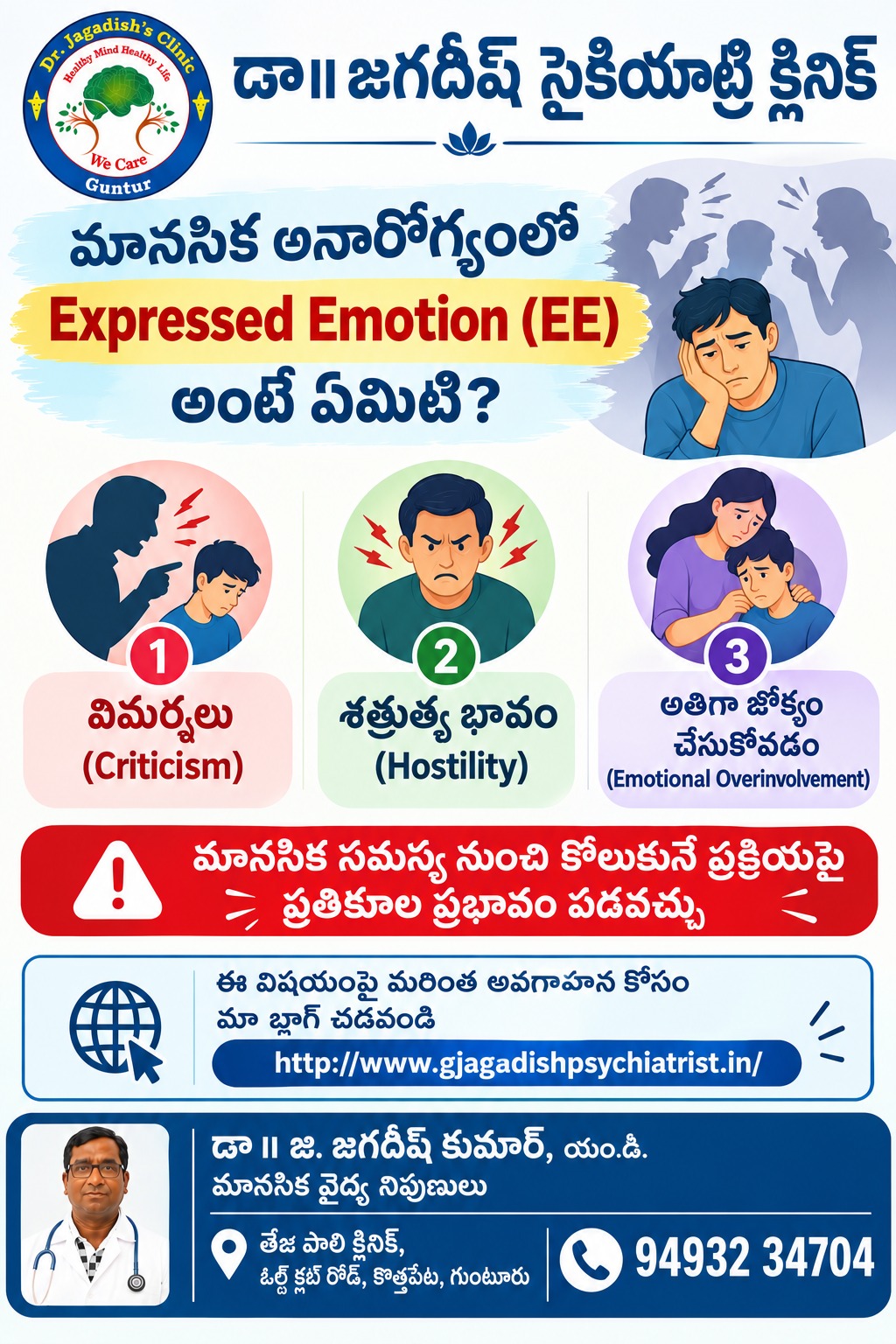
When a person is living with a mental health condition, the family environment can play an important role in their emotional well-being and recovery. Criticism, anger, hostility, excessive involvement, or constant interference from family members may increase stress and make it more difficult for the person to cope with their condition.
This is why **Family Emotional Support in Mental Illness** is important. A supportive family environment can encourage understanding, cooperation, and better communication while helping the individual continue with appropriate treatment.
## What Is Expressed Emotion in Mental Illness?
The emotions and attitudes expressed by family members toward a person with mental illness are commonly described as **Expressed Emotion (EE)**. It can include criticism, hostility, and emotional overinvolvement.
### 1. Criticism
Repeated negative comments such as “You never do anything right” or “You are the reason for all the problems at home” can make a person feel hurt, discouraged, or less confident. Constant criticism may also increase emotional stress.
Instead of focusing on blame, **Family Emotional Support in Mental Illness** should involve patience, understanding, and encouragement.
### 2. Hostility
Blaming the person for their symptoms, speaking angrily, or expressing strong negative feelings toward them can affect family relationships. A calm and respectful approach can create a more supportive environment.
### 3. Emotional Overinvolvement
Family members may sometimes become excessively worried or involved in every aspect of a person's life. Trying to control every decision or not allowing the person enough independence can increase stress.
Support does not always mean controlling. Giving appropriate independence while remaining available to help can be a healthier approach.
## How Can Family Emotional Support Affect Mental Illness?
A negative emotional environment within the family may contribute to increased psychological stress. It may also make it harder for some individuals to continue treatment regularly and can affect relationships within the family.
In certain mental health conditions, a highly stressful family environment may also be associated with an increased risk of symptoms returning. Therefore, **Family Emotional Support in Mental Illness** can be an important part of creating a positive environment for recovery.
It is important to understand that family criticism does **not** mean that the family caused the person's mental illness. However, the emotional environment at home may influence stress levels and, in some conditions, the severity or recurrence of symptoms.
## How Can Family Members Provide Emotional Support?
Family members can support someone with a mental health condition by:
* ❤️ Speaking with love, patience, and understanding. * 👂 Listening to what the person has to say without immediately judging them. * 🤝 Offering cooperation instead of criticism. * 🗣️ Discussing problems calmly and respectfully. * 💊 Encouraging the person to continue the treatment recommended by their doctor. * ❤️ Providing emotional support while also respecting their need for appropriate independence.
## Why Family Support Matters
Mental health recovery is not only about medical treatment. A person's surroundings and relationships can also influence how they experience and manage their condition.
**Family Emotional Support in Mental Illness** means creating an environment where the individual feels heard, respected, understood, and supported rather than blamed or constantly controlled.
A simple change in the way family members communicate can make conversations more positive and reduce unnecessary emotional stress.
### Final Thought
**Criticism is not the solution. Understanding, love, patience, and cooperation can provide a stronger foundation for mental health and recovery.**
If you or a family member is experiencing mental health difficulties, professional psychiatric guidance can help identify appropriate treatment and support.