
21 October 2026
Depression Symptoms and Treatment: When Should You Seek Help?
Depression Symptoms and Treatment | Psychiatrist in Guntur
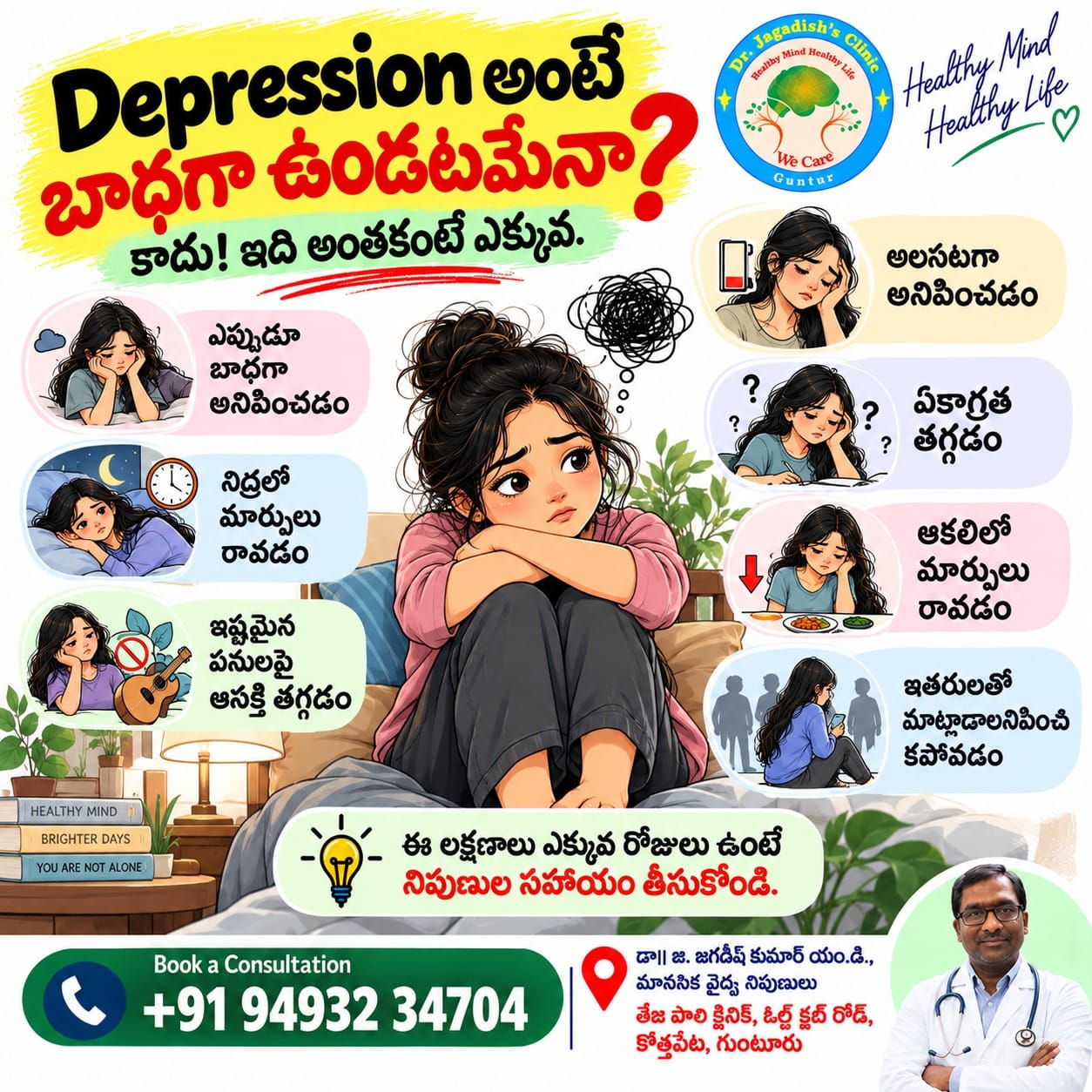
Depression Symptoms and Treatment: When Should You Seek Help?
Is Depression Just About Feeling Sad?
No. Depression is more than temporary sadness or disappointment. It is a mental health condition that can affect a person's thoughts, emotions, sleep, appetite, energy levels, relationships, and daily activities.
Everyone experiences sadness and stress occasionally. However, when these feelings persist and begin to interfere with everyday life, it is important to recognise the **symptoms of depression** and seek professional guidance.
## Common Symptoms of Depression
Recognising depression symptoms early can help individuals seek appropriate support and treatment.
### 1. Persistent Sadness or Hopelessness A person may feel sad, empty, or hopeless for much of the day, even when there is no obvious reason. They may also struggle to feel optimistic about the future.
### 2. Loss of Interest in Daily Activities Activities that once brought happiness, such as hobbies, socialising, or spending time with family, may no longer feel enjoyable.
### 3. Changes in Sleep Patterns Depression can cause difficulty falling asleep, frequent waking, early morning awakening, or sleeping more than usual.
### 4. Fatigue and Low Energy Even simple daily tasks may feel exhausting. A person might experience persistent tiredness despite getting enough rest.
### 5. Difficulty Concentrating Depression can affect concentration, memory, decision-making, and the ability to complete work or studies.
### 6. Changes in Appetite or Weight Some people experience reduced appetite, while others eat more than usual. These changes may also affect body weight.
### 7. Feelings of Guilt or Low Self-Esteem A person may blame themselves excessively, feel worthless, or believe they are a burden to others.
Not everyone experiences the same symptoms. Having one or two symptoms does not automatically mean a person has depression. A qualified mental health professional can assess the symptoms and provide an appropriate diagnosis.
## How Long Do Depression Symptoms Last?
**If symptoms such as persistent sadness, loss of interest, sleep disturbances, or low energy continue for two weeks or longer, especially when they affect daily functioning, seek a professional assessment.**
This two-week threshold is an important indicator, not a diagnosis by itself. Severe symptoms or thoughts of self-harm require immediate attention, regardless of how long they have been present.
## Why Should Depression Not Be Ignored?
Depression is not a sign of weakness, laziness, or a lack of willpower. Statements such as “Just be strong” or “Everyone has problems” can prevent people from seeking the help they need.
Ignoring persistent symptoms may affect personal relationships, work performance, education, and overall well-being. Early recognition and appropriate treatment can support recovery and improve quality of life.
## Depression Treatment and Professional Support
Depression is treatable. The right approach depends on the individual's symptoms, severity, and personal needs. Treatment options may include:
- **Psychotherapy:** Helps individuals understand their thoughts, emotions, and coping patterns. - **Medication:** A psychiatrist may recommend medication when clinically appropriate. - **Healthy daily habits:** Regular sleep, physical activity, balanced nutrition, and supportive social connections can complement professional treatment. - **Family support:** Listening without judgement and encouraging treatment can help a person feel understood and supported.
If you are looking for a **psychiatrist in Guntur**, consulting a qualified mental health professional can be an important step towards understanding your symptoms and exploring suitable treatment options.
## How Can Family Members Help Someone With Depression?
Family members can make a meaningful difference by listening patiently, avoiding criticism, acknowledging the person's feelings, and encouraging professional help. Continued patience and emotional support can help individuals feel less isolated during treatment.
If someone expresses thoughts of suicide or self-harm, take them seriously, do not leave them alone if there is immediate danger, and seek urgent professional or emergency assistance.
## Consult Dr. Jagadish's Psychiatry Clinic in Guntur
Depression is a health condition, not a personal failure. Recognising the warning signs and seeking timely professional support can be the first step towards recovery.
**Dr. Jagadish's Psychiatry Clinic**
**Dr. G. Jagadish Kumar, M.D.** Consultant Psychiatrist
**Location:** Teja Polyclinic, Old Club Road, Kothapet, Guntur **Phone:** 94932 34704 **Website:** http://www.gjagadishpsychiatrist.in/
If depression symptoms persist for two weeks or longer, consider consulting a mental health professional. You do not have to face these difficulties alone.