
8 October 2026
5 Common Symptoms of Anxiety You Should Not Ignore
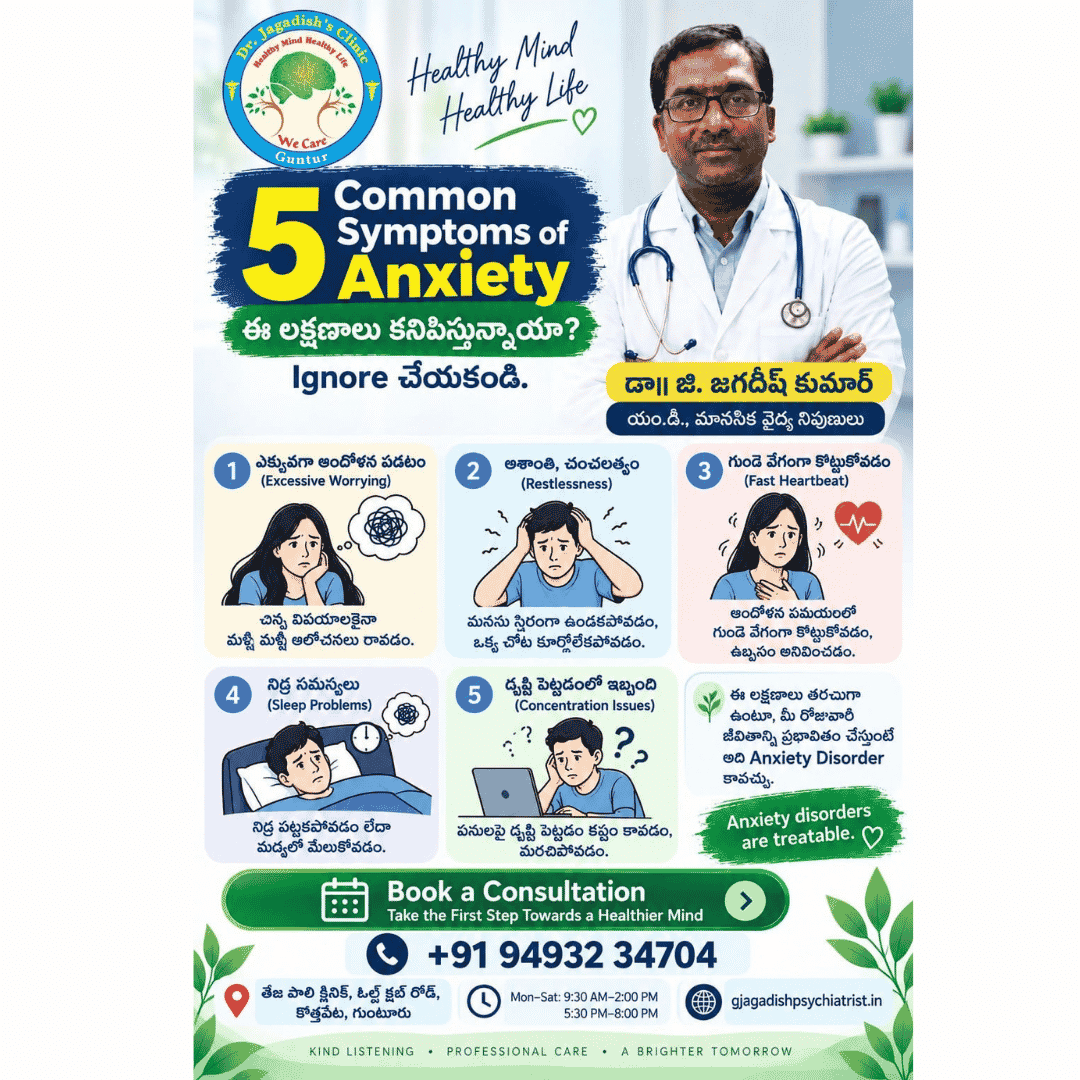
5 Common Symptoms of Anxiety You Should Not Ignore
Anxiety is a natural response to stress, uncertainty, and challenging situations. However, when anxiety occurs frequently, becomes difficult to control, or starts affecting daily life, it should not be ignored. Recognizing the **5 common symptoms of anxiety** can help you understand when it may be time to seek professional support.
Anxiety can affect both mental and physical health. While occasional worry is normal, persistent symptoms that interfere with sleep, work, education, or relationships may require further evaluation by a mental health professional.
## 1. Excessive Worry and Fear
One of the most common symptoms of anxiety is excessive worrying about everyday situations. A person may repeatedly think about small problems, worry about the future, or constantly fear that something bad might happen.
Thoughts such as “What if something goes wrong?” may occur frequently, even when there is no immediate danger. This continuous worrying can make it difficult to relax and enjoy daily activities.
When these thoughts become persistent and difficult to manage, professional guidance may help identify their cause and develop effective coping strategies.
## 2. Restlessness and Feeling Uneasy
Restlessness is another common sign of anxiety. People may feel uncomfortable sitting still, experience constant inner tension, or struggle to feel calm even when their surroundings are peaceful.
This feeling of uneasiness can affect concentration, productivity, and social interactions. Some individuals may also experience irritability or difficulty relaxing after a stressful day.
Learning relaxation techniques and identifying anxiety triggers can help manage these feelings. If restlessness continues or affects daily functioning, a mental health assessment may be beneficial.
## 3. Rapid Heartbeat and Physical Symptoms
Anxiety does not affect only the mind. It can also produce physical symptoms, particularly during periods of intense worry or fear.
Common physical symptoms include:
* Rapid heartbeat or palpitations * Sweating * Trembling or shaking * A feeling of tension or discomfort
These symptoms may occur when the body responds to perceived stress or danger. However, a rapid heartbeat, sweating, or chest discomfort can also have other medical causes. Do not automatically assume these symptoms are caused by anxiety. Seek medical evaluation when needed, especially for new, severe, or persistent symptoms.
## 4. Sleep Problems
Sleep difficulties are frequently associated with anxiety. Repeated worrying and racing thoughts can make it harder to fall asleep or stay asleep throughout the night.
People experiencing anxiety may:
* Take a long time to fall asleep. * Wake up several times during the night. * Feel that their sleep is not refreshing. * Experience tiredness and reduced energy the next day.
Poor sleep can increase stress and make anxiety more difficult to manage, creating a cycle that affects overall well-being. Maintaining a regular sleep schedule, reducing stimulating activities before bedtime, and seeking professional advice for persistent sleep problems may help.
## 5. Difficulty Concentrating
Anxiety can make it challenging to focus on everyday tasks. When the mind is occupied with repeated worries, concentrating on studies, work, conversations, or household responsibilities may become difficult.
A person may frequently lose track of what they are doing, become distracted by anxious thoughts, or take longer to complete routine activities.
If concentration problems persist and interfere with daily responsibilities, it is important to consider the possible causes rather than dismissing them as a lack of motivation.
## When Should You Seek Professional Help?
Experiencing one or two anxiety symptoms occasionally does not necessarily mean you have an anxiety disorder. The frequency, intensity, duration, and impact of symptoms are important factors in determining whether further assessment is needed.
Consider consulting a mental health professional if anxiety regularly affects your sleep, work, studies, relationships, or ability to manage daily activities.
A psychiatrist can assess your symptoms, identify possible contributing factors, and recommend an appropriate treatment plan. Depending on individual needs, treatment may include psychotherapy, lifestyle changes, medication, or a combination of approaches.
## Conclusion
Recognizing the **5 common symptoms of anxiety**—excessive worry, restlessness, physical symptoms, sleep problems, and difficulty concentrating—is an important step toward better mental health.
Anxiety is not something you need to hide or manage alone. With timely assessment and appropriate support, many people can manage their symptoms and improve their quality of life.
If anxiety is affecting your daily routine, consider seeking professional guidance instead of ignoring the warning signs.
Dr. Jagadish's Psychiatry Clinic
Dr. G. Jagadish Kumar, M.D. – Consultant Psychiatrist Teja Polyclinic, Old Club Road, Kothapet, Guntur Phone: 94932 34704 Website: [www.gjagadishpsychiatrist.in](http://www.gjagadishpsychiatrist.in)